
Visualize this: your kids get their weekly allowance, spend it all on candy, and then the next day see a toy that they really wanted. But the money’s gone. Sound familiar? That little moment is actually a big lesson and that’s exactly where teaching children about finance begins.
According to a 2023 study by the National Financial Educators Council, nearly 70% of teens say they wish their parents had taught them more about money management. That gap in financial education often leads to poor money habits in adulthood.
At Finquesty, we believe learning about money shouldn’t start in adulthood. The purpose of this article is to assist both children and parents in understanding the reasons why learning about money matters and how to make it engaging, practical, and part of everyday life. Because teaching children about finance isn’t just about saving money, it’s about building confidence, discipline, and independence. Whether it’s saving a few dollars, budgeting for a goal, or understanding the value of work, financial literacy can empower kids to make smart choices now and in the future.
Why Teaching children about finance Matters
Teaching children about finance goes far beyond coins, notes, allowances and piggy banks, it is about preparing them for facing life’s challenges. When children learn skills like budgeting, saving, and making wise choices, they are not only handling money; they are learning self-control, planning and patience, as these virtues are part of the process. Financial literacy is probably one of the strongest skills a child can acquire as it shapes almost every decision they will make later on in life.
The University of Cambridge research shows that children develop money habits by the age of seven. So, starting early gives them a stronger base which is definitely better for their financial mindset in the long run.
Expert like Beth Kobliner, author of Make Your Kid a Money Genius (Even If You’re Not), emphasize on the importance of small and consistent lessons at home. Saving for a toy, for example, is a simple way to teach a child delayed gratification and the value of the work. And when parents take their kids along while making real-world decisions such as planning a budget for the family outing or comparing prices of items in the store, kids become more engaged, and the lessons they learn have a greater impact and hence, they are retained for a longer period of time.
Moreover, research finds that students participating in financial literacy programs have better credit scores, are less likely to make late payments, and handle debt in a more responsible manner than those who have not attended such programs when they become adults. So yes, teaching children about finance today plants the seeds for financial freedom tomorrow.
Practical Ways to Teach Kids About Money
The most effective way of teaching children about finance is, it should be enjoyable and which involves hands-on experience. Here are several well-known methods that help kids acquire money management skills in a way that feels natural and not forced.
The Three-Jar System
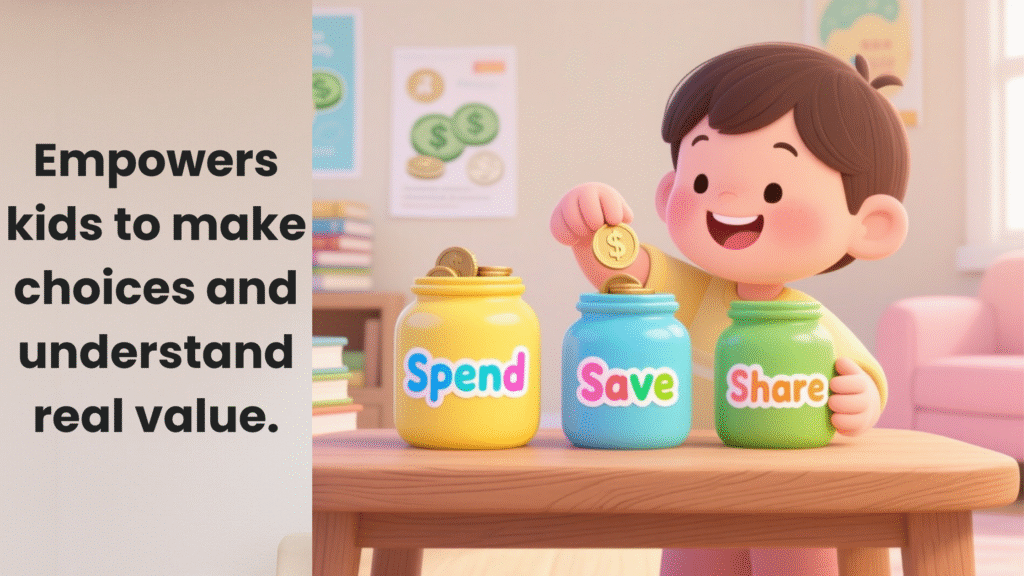
For example, three jars with the labels Spend, Save, and Share are sufficient for children aged 4 to 8. Give them the freedom to share their earnings each time they get money. The kids visually see their money growing and get a real feeling of achievement and by giving away from their “Share” jar, they learn the value of empathy and generosity. It’s a simple but powerful first step in teaching children about finance.
Games and Apps That Teach Money
Children are fond of the latest technology, so why not use it to your advantage? A digital tool such as PiggyBot or Bankaroo brings your child close to the real-life money management process, whereas a traditional game like Monopoly or The Game of Life gives an understanding of budgeting and investment which are fun way of teaching children about finance. Doing money talks through games keeps the topic fresh and without pressure.
Encourage Earning Opportunities
Even small tasks can instill big lessons. Provide opportunities for the kids to earn money through doing household chores, pet-sitting, or selling items. In no time, they will understand the connection between effort and reward, and it’ll give them a sense of ownership over their finances.
Family Budget Challenges
Budgeting can be a fun family activity, if you have older kids and preteens. You can give them a short budget and ask them to organize the family treat for that amount, e.g., a movie night or a picnic. Such experience promotes the development of the skills of decision-making, prioritization, and problem-solving as it is a very practical task.
Everyday Money Moments
Use real-life opportunities for teaching children about finance. Let kids help you with grocery shopping, comparing prices, or finding discounts prices or discuss why you’re choosing one product over another. Such minor interactions help kids become familiar with financial thinking and real-life experiences teach them the value of money in daily life.
When kids see that learning is interactive and relevant, they start treating money not as a source of anxiety but as something manageable.
Tips for Parents: Building a Financially Savvy Home
Children take in a lot more from the things that they observe than what they are told. Thus, parents can demonstrate by their actions and at the same time, make financial education a living experience of the whole family in the following ways:
Talk About Money Openly
Get rid of the money talk taboo that has been around for ages. Discuss about family goals, such as saving for a trip or buying something nice, and explain how planning and budgeting help to achieve that.
Create a Simple Family Budget
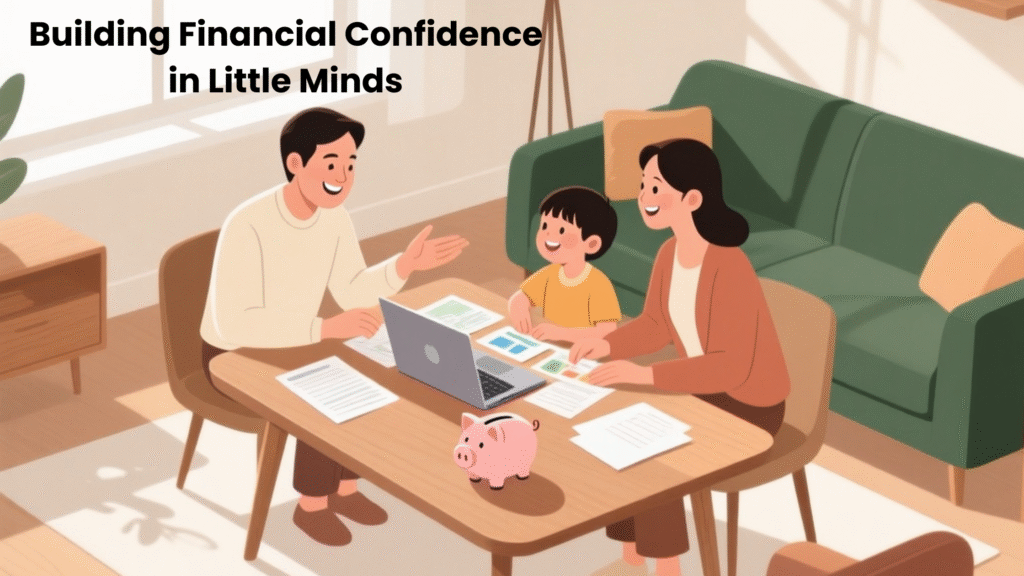
Explain to your children how income, expenses, and savings are related. Let them take the decision, perhaps they will suggest cutting a small expense in order to save for something that is of value. It is Empowering when your kids feel that their opinion is taken into account.
Be the Example
Definitely, kids are very quick in picking up habits. So, if they see that you are saving regularly, paying your bills on time, and refraining from making an impulsive purchase, they will follow suit. Be transparent, share with them your financial decisions and even your mistakes, those stories will be remembered more than lecturing.
Celebrate Progress
When your child reaches a savings goal, celebrate it! Using positive reinforcement will help children to connect making wise money choices with the feeling of pride and success.
Make It a Habit
It is of great importance, that consistency matters. Set up short sessions of “money talks” every week or month in which you discuss goals, savings, or even family expenses. Regular conversation keeps financial literacy alive and evolving.
Frequently Asked Questions
At what age should I start teaching children about finance?
As early as 5–6 years old. Start with simple concepts like saving and sharing, then introduce budgeting and earning as they grow.
What’s the best way to teach teens about money?
Give them real responsibility, a small monthly allowance, a prepaid card, or a project budget. Encourage them to track expenses and make their own financial choices (and mistakes).
How do I make finance fun for kids?
Use games, stories, and challenges. Kids learn best when lessons are interactive, like a “saving for a family goal” game or mock shopping challenges.
Should schools teach personal finance?
Absolutely. But learning at home is just as vital. Schools can teach theory; parents should reinforce it through daily practice.
Conclusion
Teaching children about finance should not be considered as just one more task of the parenting, it’s a long-term investment in their future independence and happiness. Parents who start early, keep the lessons simple, and integrate money in everyday life naturally are not only just giving their kids pocket money, but the invaluable mindset and the confidence to be able to make smart financial choices.
Financial literacy is a powerful tool in life, that leads to independence, strengthens resilience, and gives inner peace. Therefore, whether it is the establishment of a savings jar, discussing the grocery budget, or celebrating small financial achievements, each moment is a step toward lifelong confidence and stability.
So, Start the conversation today, because the best investment you can make for your child’s future is not what you buy for them, it’s what you teach them about money.


We must save much fund for their future…and must always do and try best for their better education
We should give kids money as per their need and in a limit manner.Instead of 50if we started giving 100to them they will never value for money and they will never know how hard is to earn money ..They start spending more and it may take them in wrong path